Facilities
The NAIL Lab is located in Engineering Building 4 (SAB2), Room 111, on the University of Houston Sugar Land campus. A heterogeneous robot fleet, a motion-capture testing arena, a multi-GPU training server, and a wide range of edge-AI hardware let us take our methods from simulation to real experiments, from learning-based control and multi-robot coordination to efficient perception on microcontrollers.
- 14 aerial, ground, and legged robots
- 4 NVIDIA RTX PRO 6000 Blackwell GPUs
- 22 edge-AI boards and microcontrollers
- 24 × 24 × 8 ft motion-capture volume
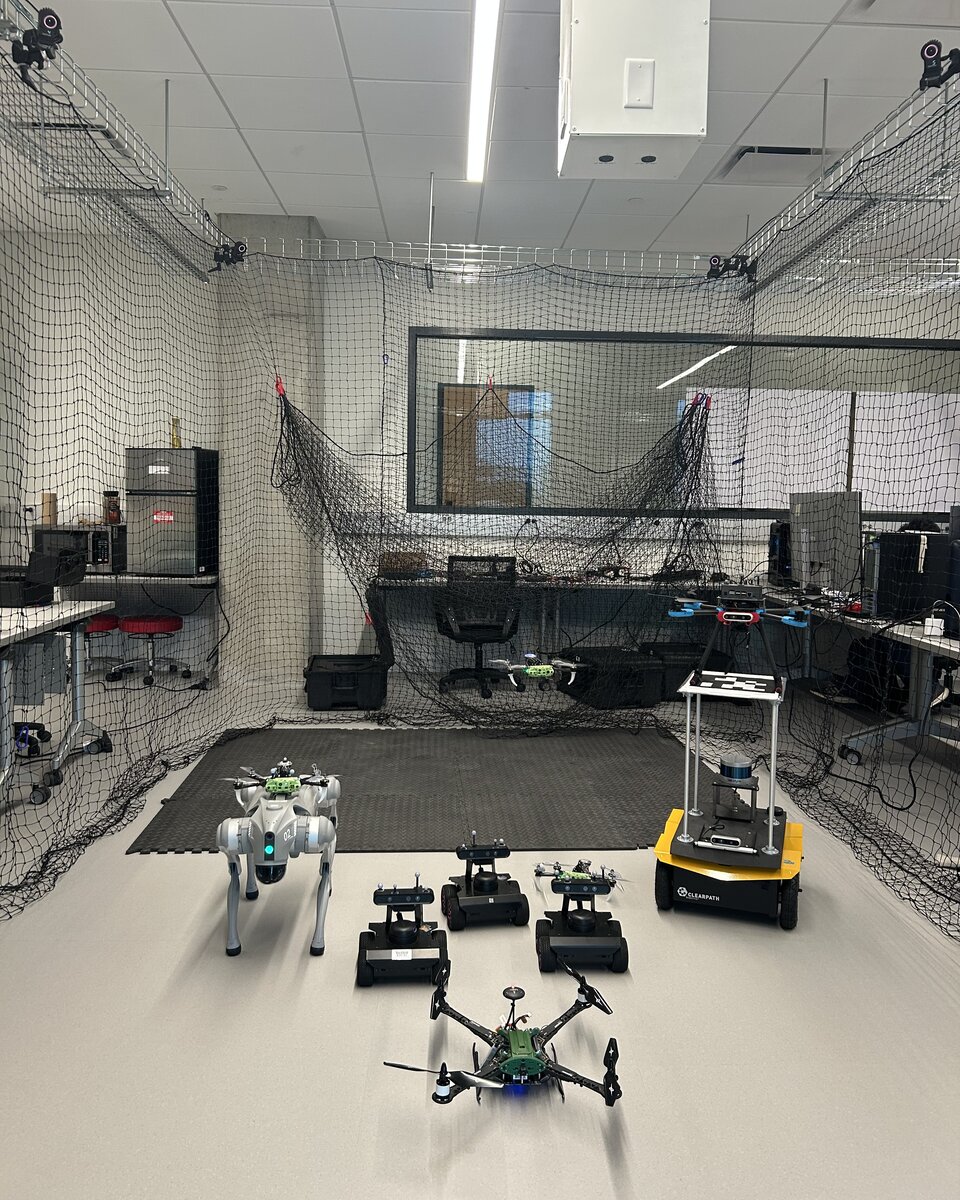
Testing arena and lab space
Our indoor testing arena is covered by an OptiTrack motion-capture system that tracks robots with sub-millimeter precision. The enclosed space lets us safely test formation control, swarm behaviors, multi-robot collaboration, and human-robot interaction.
- Research space
- 800 sq ft for graduate student research
- Testing arena
- 300 sq ft, enclosed by safety netting
- Motion capture
- 8 OptiTrack Flex 13 cameras, 24 × 24 × 8 ft volume
- Tracking capacity
- Up to 14 objects at once
- Location
- Engineering Building 4 (SAB2), Room 111, UH Sugar Land
Aerial robots
Drones for multi-drone coordination, swarm, and edge-AI experiments.
-
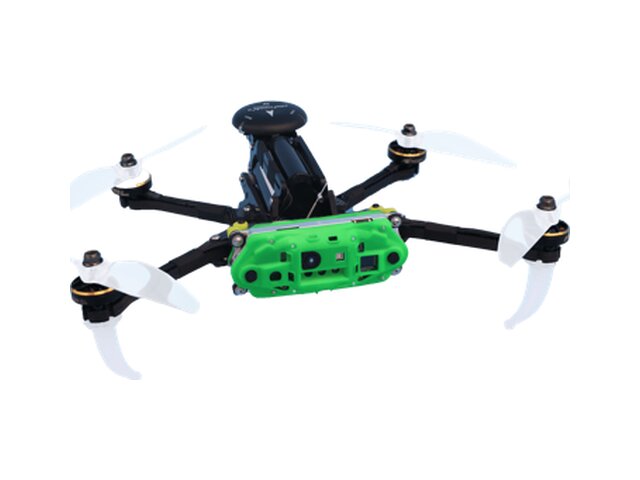 3 units
 ModalAI Seeker SLAM drone
Drones with onboard visual SLAM, navigation, and mapping, used for multi-drone coordination and swarm experiments.
-
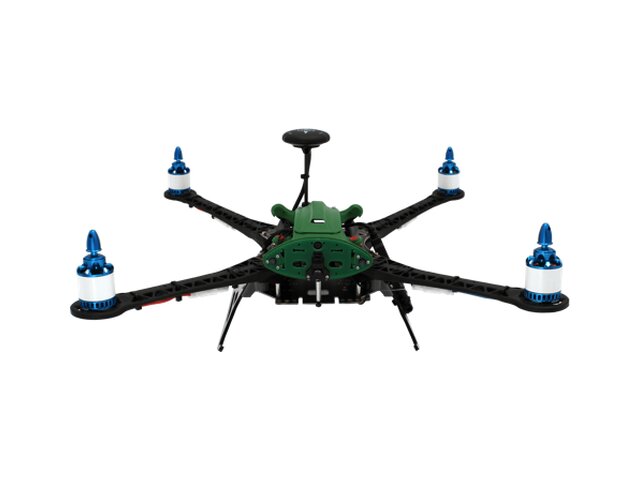
ModalAI Sentinel drone
VOXL 2 development drone with 5G connectivity and onboard AI processing for edge-AI and high-bandwidth communication research.
-
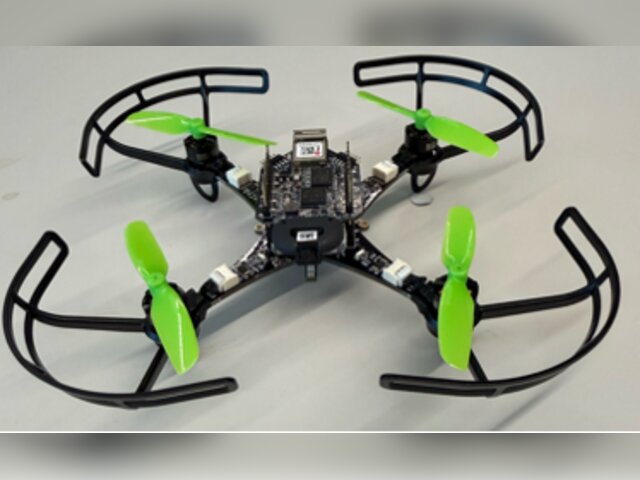 4 units
 Crazyflie 2.1 Brushless AI bundle
Nano quadcopters with an AI-deck for onboard neural network inference, used for swarm and edge-AI research.
-
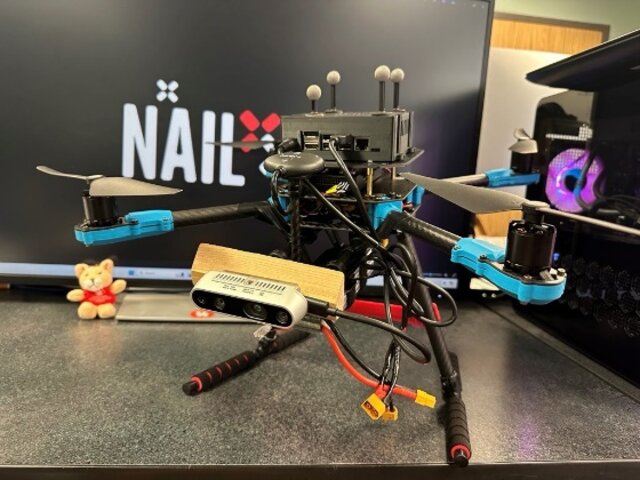
Self-assembled AI drone
Drone designed and built in the lab for specialized experiments and rapid prototyping.
Ground and legged robots
Wheeled and legged robots for formation control, multi-agent coordination, perception, and locomotion research.
-
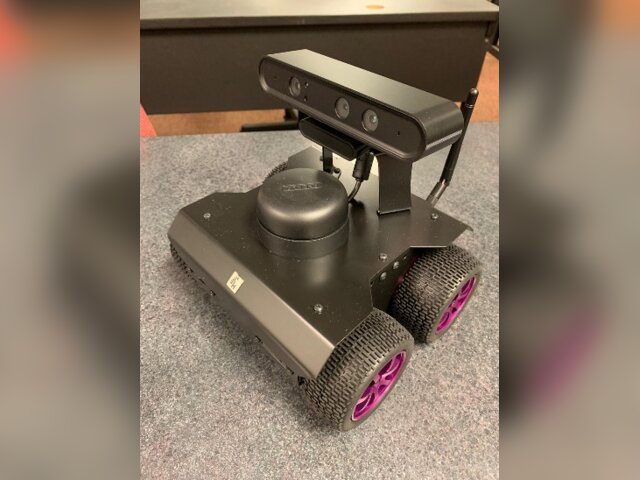 3 units
 ROSbot 2.0 Pro
Ground robots with a full sensor suite for formation control and multi-agent coordination experiments.
-
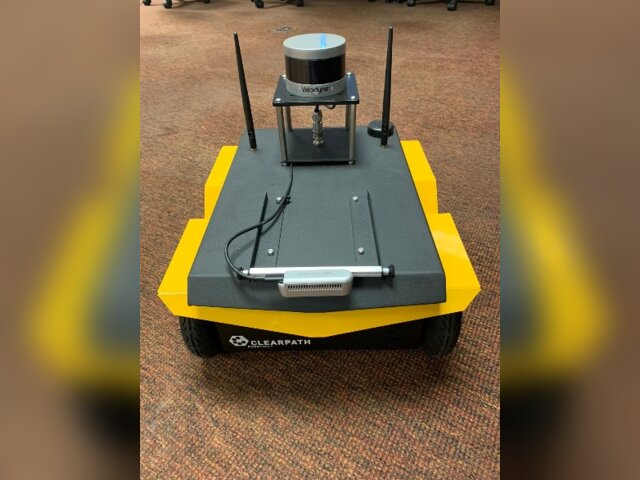
Clearpath Jackal J100
Ground robot with a Velodyne VLP-16 3D lidar and an Intel RealSense D435 camera for perception and navigation research.
-
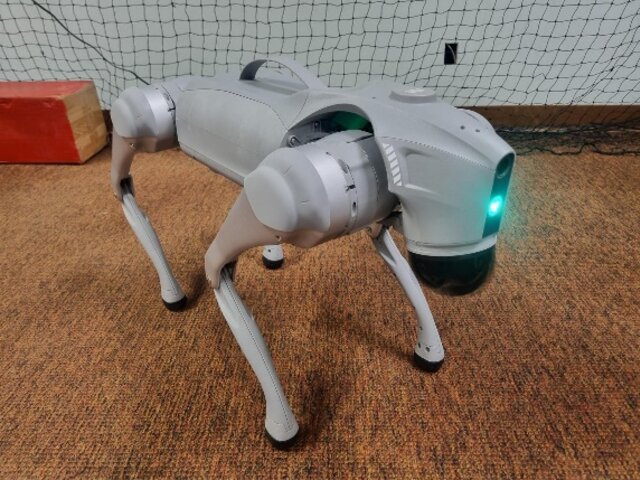
Unitree Go2 quadruped
Legged robot for research on dynamic locomotion, balance control, and navigation over complex terrain.
Computing and edge AI
A GPU server for training large models, and embedded boards for running them on board, in real time and on a power budget.
-
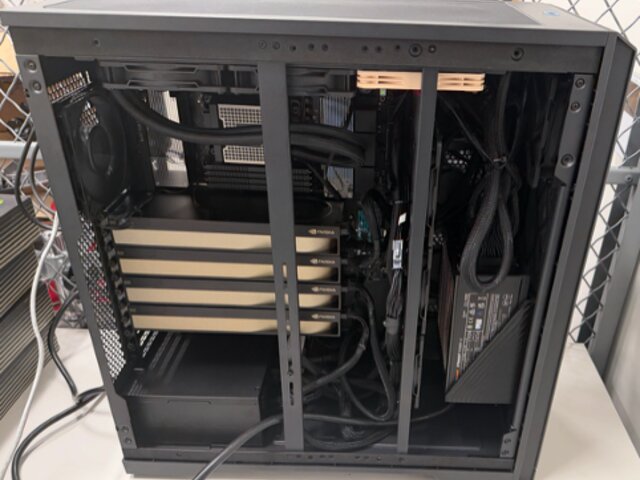 4 GPUs
 Custom AI server
In-house server for large-scale training and inference with four NVIDIA RTX PRO 6000 Blackwell Max-Q GPUs, an AMD Ryzen Threadripper 9975WX (32 cores), 192 GB of DDR5-6400 memory, and a 4 TB NVMe SSD.
-
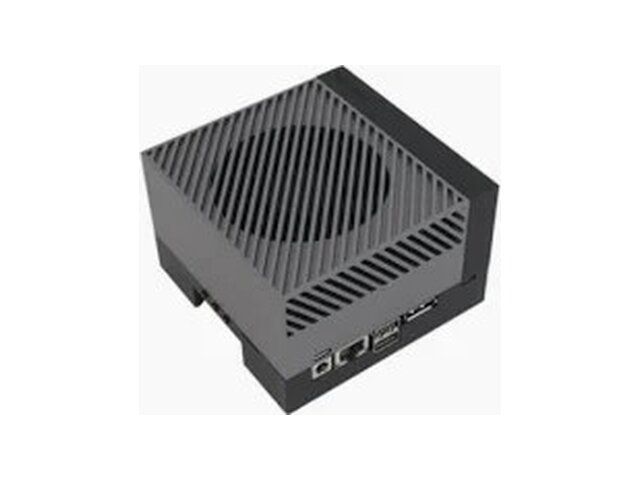 3 units
 NVIDIA Jetson AGX Orin 64 GB
Developer kits with up to 275 TOPS of AI performance for onboard autonomy in robots and drones.
-
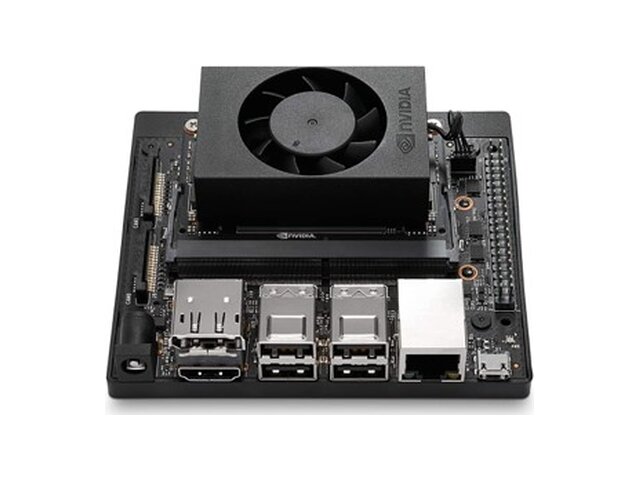
NVIDIA Jetson Xavier NX
Compact module with 21 TOPS of accelerated computing for edge AI.
-
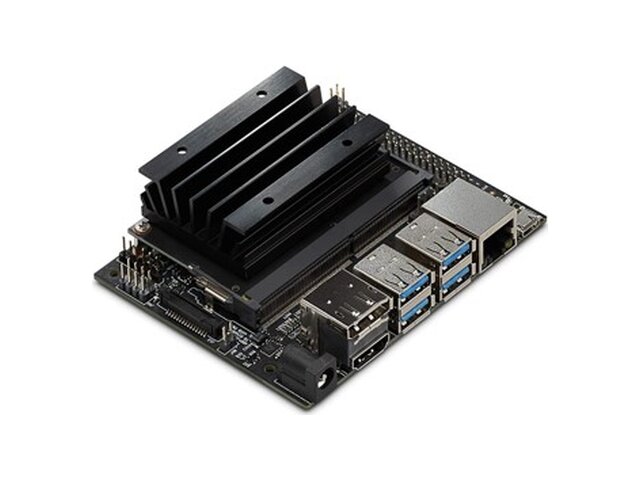 5 units
 NVIDIA Jetson Nano kits
Four Jetson Orin Nano kits and one original Jetson Nano for prototyping and deploying AI at the edge.
-
 10 units
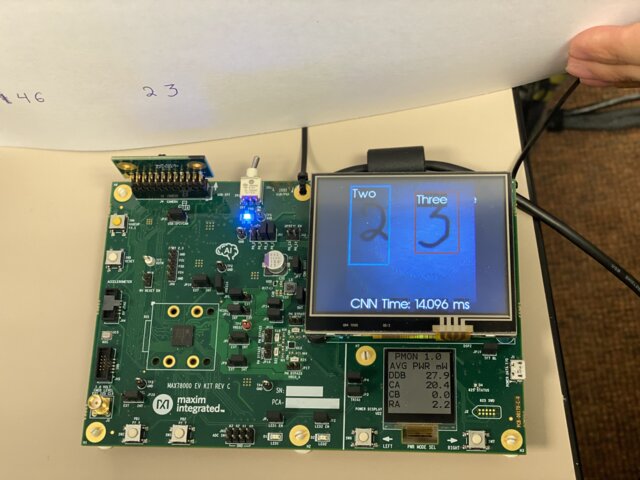
 MAX78000 and MAX78002 microcontrollers
Ultra-low-power microcontrollers with a hardware CNN accelerator, used in our neural architecture search work. Six MAX78000 and two MAX78002 evaluation kits, and two MAX78000 Feather boards.
-
 3 units
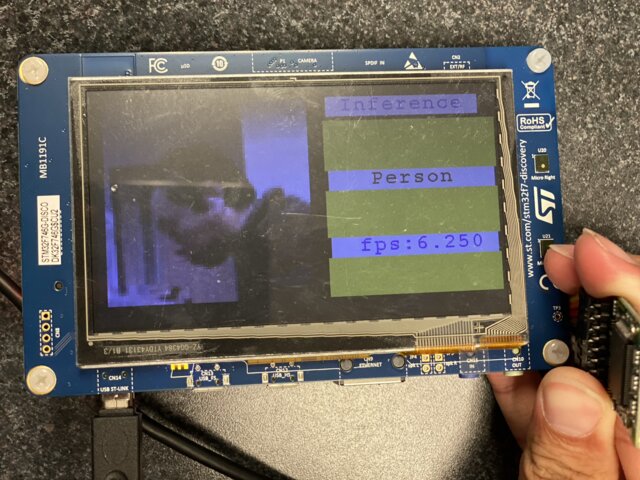
 STM32F746NG Discovery kits
Arm Cortex-M7 boards with a touchscreen and Ethernet for embedded AI and systems development.
Sensors and fabrication
Sensors for perception experiments, beyond the motion-capture system above, and a 3D printer for building custom parts.
-
 2 units
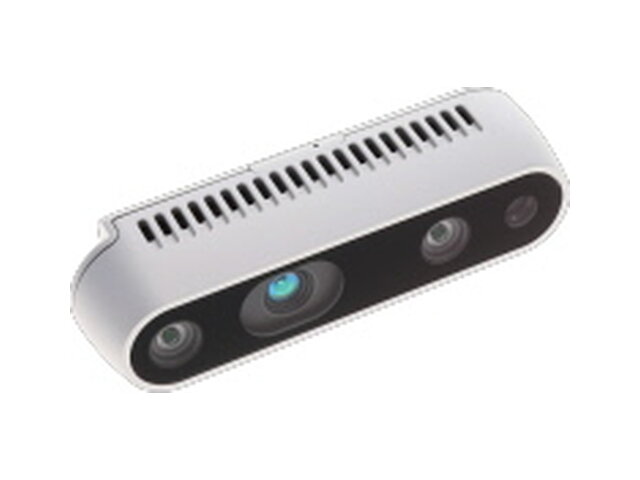
 Intel RealSense D435i
RGB-D cameras with a built-in IMU for depth sensing, visual odometry, and 3D perception.
-
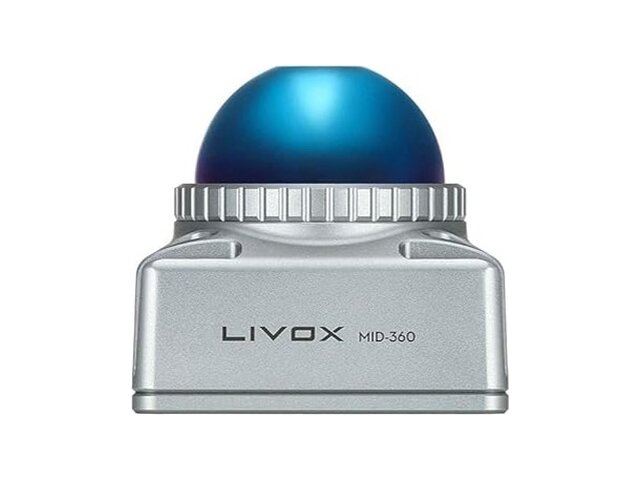
Livox Mid-360 lidar
360° lidar that produces dense point clouds for mapping and navigation.
-
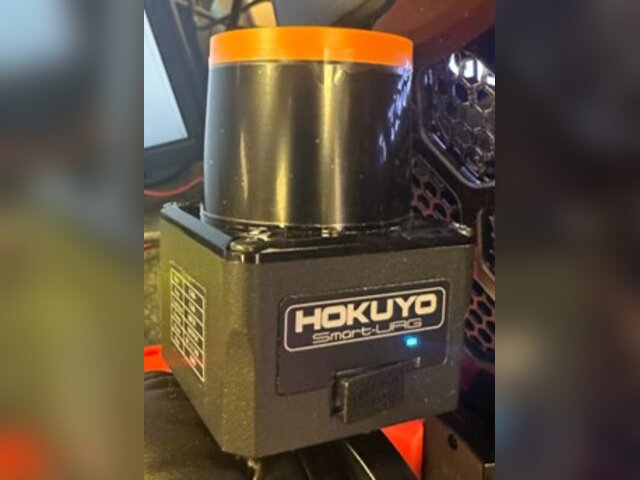
Hokuyo UST-10LX
Scanning laser rangefinder for precise distance measurement in navigation and mapping.
-
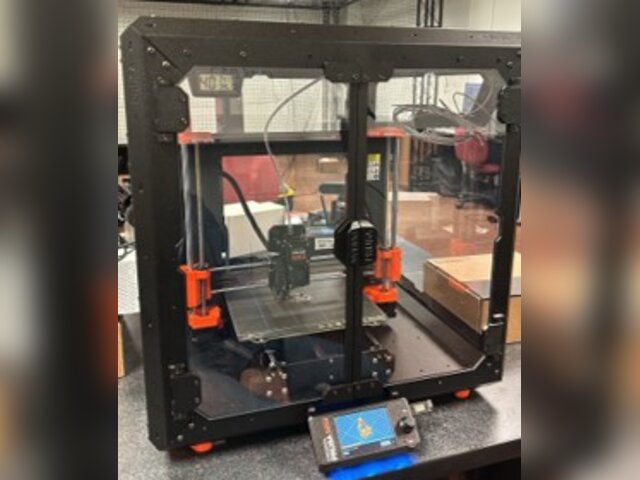
Prusa MK4 3D printer
Enclosed 3D printer for rapid prototyping and custom robot parts.
Equipment in action
-
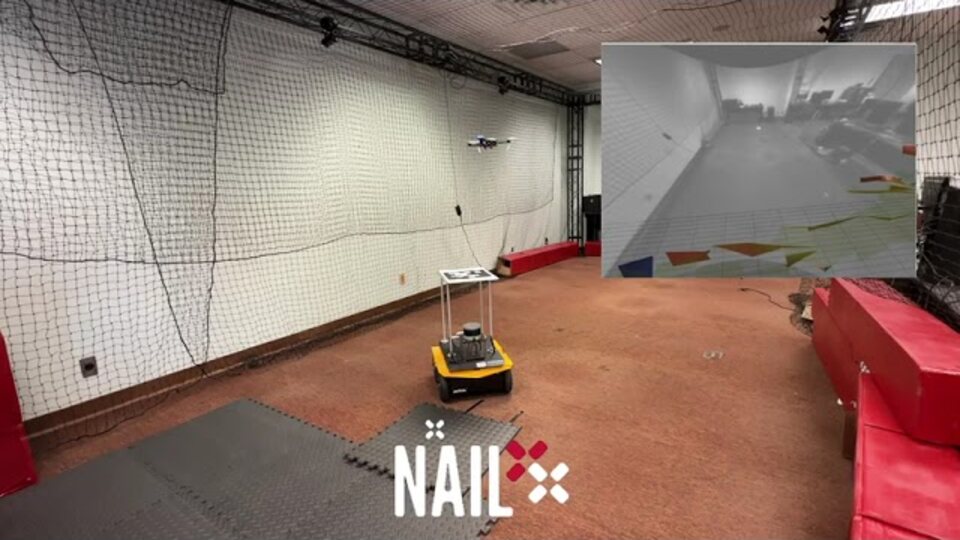
Autonomous drone landing on a moving ground robot
A drone lands on a moving ground vehicle, showing precise real-time control and communication between robots.
-
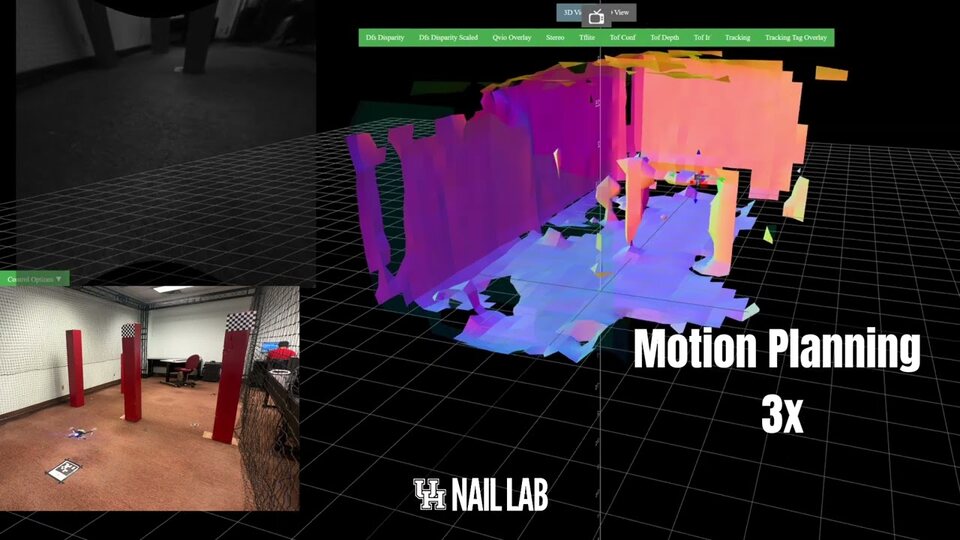
Seeker drone mapping, motion planning, and object detection
The ModalAI Seeker drone builds a map with SLAM, plans its motion autonomously, and detects objects in real time.
-
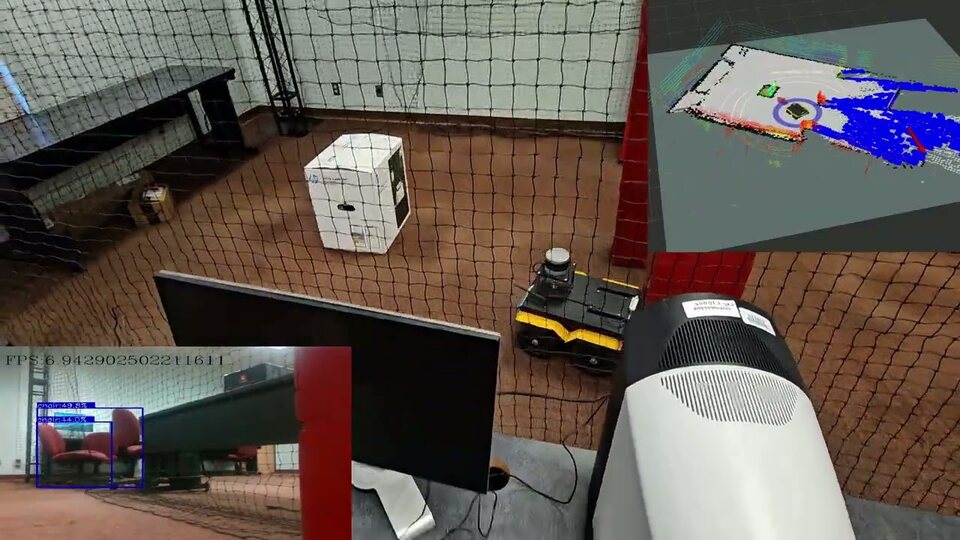
Fully autonomous Jackal robot
The Jackal robot runs SLAM, avoids moving obstacles, and detects objects indoors and outdoors.
For collaborations or access to lab resources, please contact Dr. Bin Hu.